Why the Anion Gap Matters in Critical Care
What exactly is the anion gap?
The anion gap is a calculated value that enables clinicians assess the balance of electrolytes in the blood. It is usually derived from the main ions measured on a basic metabolic panel, especially sodium, chloride, and bicarbonate. Because routine lab tests do not measure every charged particle in the blood, the anion gap estimates the amount of unmeasured anions present.
In simple terms, the anion gap helps indicate whether something is missing from the expected acid-base balance. A low or high result does not confirm a condition by itself, but it acts as an important diagnostic clue in the emergency setting. That is why an anion gap calculator is often used as soon as blood chemistry results are available.
The calculation is commonly based on the difference between positively charged sodium and the sum of chloride plus bicarbonate. Since bicarbonate is a key buffer, changes in its level often reflect a metabolic derangement that needs rapid attention. Emergency clinicians use this value to identify an acid-base disorder before the cause is fully known.
How come emergency clinicians use an anion gap calculator
ED practice depends on fast recognition of patterns. The anion gap calculator assists clinicians rapidly judge whether a patient may have metabolic acidosis, a potentially dangerous form of acidemia that can occur in critical illness. It is not merely a number; it is a tool for clinical decision-making.
If a patient presents with changes in mental status, tachypnea, hypotension, or suspected toxin exposure, the anion gap can sharpen the differential diagnosis. Together with an arterial blood gas and a basic metabolic panel, it helps determine whether the patient has a primary acid-base problem and whether compensation is appropriate. The result can influence triage, the need for repeat labs, and whether advanced critical care support is needed.
The anion gap is especially helpful because it can provide a quicker signal than waiting for a complete workup. If the anion gap is elevated, clinicians may immediately consider lactic acid elevation, ketone production, renal dysfunction, or toxic ingestion. If it is normal, they may shift attention to bicarbonate loss, chloride excess, or a mixed process. That quick sorting makes the tool valuable in the first minutes of evaluation.
Elevated anion gap vs standard anion gap: what is the distinction?
A elevated anion gap suggests that extra acids or acid-related compounds are gathering in the blood. This often happens when there is increased production of acids or reduced clearance of them. Common causes include lactic acidosis, ketoacidosis, and renal failure.
In lactic acidosis, excess lactate accumulates when tissues do not receive sufficient oxygen or are unable to use oxygen effectively. In ketoacidosis, the body creates ketones when it cannot use glucose properly. In renal failure, acid removal is reduced, which allows acid compounds to accumulate.
A normal anion gap, sometimes called a non-gap metabolic acidosis, usually points to bicarbonate loss with a compensatory rise in chloride. This is frequently called hyperchloremic acidosis. In this pattern, the blood may still be acidic, but the missing bicarbonate is replaced by chloride rather than by unmeasured acids. That difference matters because it changes the likely etiology and next tests.
Emergency clinicians rely on the distinction between high and normal anion gap to shape anion gap clinical significance the workup quickly. A high gap often signals acid accumulation from severe systemic disease or toxin exposure, while a normal gap may suggest gastrointestinal bicarbonate loss or renal tubular problems. In both cases, the anion gap is not the final answer, but it helps determine the direction of the search.
Typical urgent reasons of an elevated anion gap
Various urgent conditions can cause an elevated anion gap, and some require immediate treatment. Amongst the most important are sepsis, shock, toxic alcohols, and salicylate poisoning. Each can create a critical metabolic state that requires rapid recognition.
Sepsis can trigger lactic acid buildup when infection leads to poor perfusion and impaired oxygen delivery. Shock from any cause can do the same because of tissue hypoperfusion, which raises anaerobic metabolism and lactate production. In these settings, the anion gap may be an early warning sign that the patient is declining even before the Take a look at the site here full picture is clear.
Toxic alcohols such as methanol or ethylene glycol can result in a marked high anion gap through toxic metabolites. These cases are time-sensitive, and early lab interpretation may be the first clue that a poisoning is present. Salicylate poisoning can also cause an elevated gap and a complex acid-base pattern, sometimes including respiratory alkalosis and metabolic acidosis together.
Because these causes are potentially life-threatening, an increased anion gap should trigger immediate attention to the patient’s symptoms, vital signs, and exposure history. The Anion Gap Calculator helps clinicians move from a vague complaint to a focused list of dangerous possibilities.
How to interpret the anion gap in clinical context
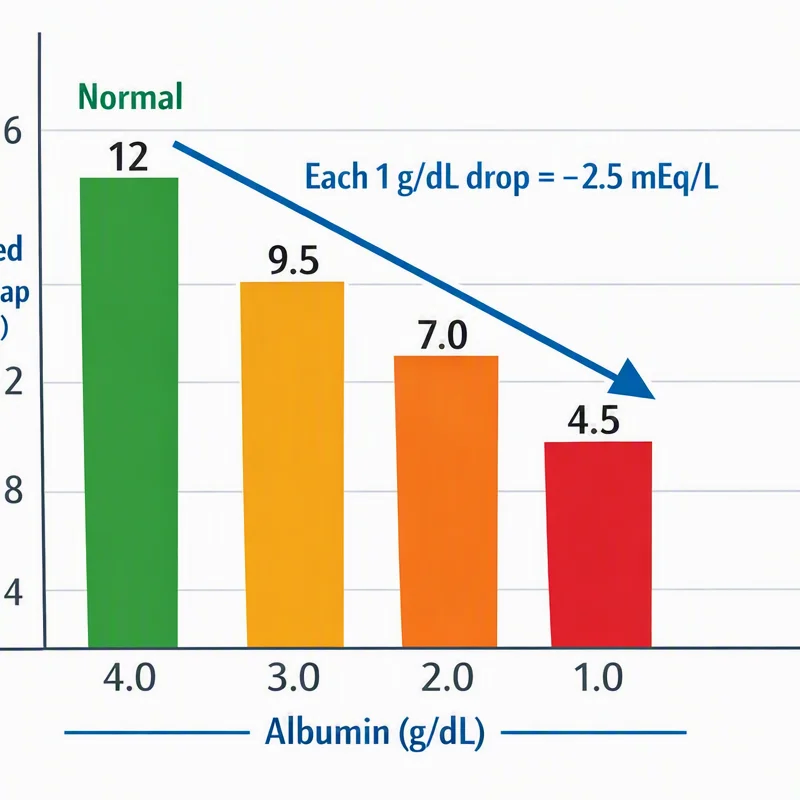
Understanding the anion gap requires more than checking a single number. Albumin serves a major role because it is a negatively charged protein that strongly affects the gap. If albumin is low, the measured anion gap may seem falsely normal or only mildly elevated even when important acids are present.
For that reason a corrected anion gap is often more informative than the raw value. Adjusting for albumin strengthens lab interpretation and helps reduce missed diagnoses in patients with critical illness, malnutrition, liver disease, or inflammation. A lower albumin level can mask a clinically important acid load.
Another useful concept is the delta gap, which compares the change in anion gap to the change in bicarbonate. This helps reveal whether another acid-base disorder is also present. For example, a patient may have a high anion gap metabolic acidosis plus a second process such as metabolic alkalosis or normal-gap acidosis.
Context also includes the rest of the lab values. A rising creatinine may support renal failure, a high lactate can support tissue hypoperfusion, and positive ketones can support ketoacidosis. The anion gap is strongest when it is considered alongside the patient’s symptoms, history, exam findings, and full electrolyte picture.
When a normal anion gap can still be dangerous
A typical anion gap does not guarantee well-being. Serious illness can still be hiding even if the number appears comforting. For example, diarrhea can lead to significant bicarbonate loss and a normal-gap metabolic acidosis that causes acidemia. The patient may be markedly sick despite a gap that is not elevated.
Renal tubular acidosis is another important cause of normal anion gap acidosis. In this condition, the kidneys cannot appropriately manage acid or bicarbonate handling. Patients may present with weakness, dehydration, or electrolyte abnormalities that need treatment even though the anion gap does not stand out.
A mixed acid-base disorder can also hide a dangerous process. One disorder may raise the gap while another lowers it, creating a value that looks normal on paper. For example, a patient may have lactic acidosis plus metabolic alkalosis, or a high-gap process plus chloride-driven acidosis. In such cases, the anion gap alone can fail to show the full picture.
Chloride is central to recognizing these cases because increased chloride often accompanies bicarbonate loss. If the clinician only sees a normal anion gap, the underlying problem may be ignored. This is why the electrolyte pattern must always be read as a single unit, not in isolation.
Why the anion gap is useful for assessment and treatment decisions
In emergency care, the anion gap helps clinicians decide who needs more rapid escalation. A significantly elevated gap may indicate a critical process requiring immediate evaluation in critical care. Before even the exact cause is known, the result can justify prompt testing, ongoing monitoring, or ICU-level concern.
The gap also supports early diagnosis. If the clinical picture suggests sepsis, shock, diabetic crisis, poisoning, or renal failure, the anion gap helps show that a metabolic process is underway. This can accelerate treatment choices such as fluid resuscitation, toxin-specific therapy, insulin, dialysis consultation, or repeat evaluation of acid-base status.
For monitoring, serial anion gaps can help track whether a treatment is working. If the cause is corrected, the gap may decrease as the underlying acid load falls. That trend can be especially useful in patients with acidemia who are too unstable to wait for slower clinical changes.
Because the anion gap is available from common chemistry testing, it is a useful tool for bedside decisions. It does not replace the exam or more advanced testing, but it gives emergency teams a rapid way to identify the sickest patients and to direct the next diagnostic step.
Limitations of anion-gap interpretation
Although valuable, the anion gap is not perfect. A laboratory error can produce a misleading result, which is why a repeat test is sometimes necessary if the number does not fit the clinical picture. Issues in specimen handling, sample contamination, or transcription problems can all alter interpretation.
The chosen reference interval also matters. Some laboratories may follow slightly different methods and normal values, so clinicians must interpret the result according to the reporting lab. A value that appears mildly abnormal in one setting may be normal in another.
The gap is also limited because it calculates only some of the chemistry in the blood. Unmeasured anions may collect, but the tool cannot identify them directly. It can hint at their presence in the body, yet it cannot name the exact substance causing the imbalance. That is why the anion gap is a hint, not a definitive solution.
Ultimately, clinical circumstances always matters. A patient with vomiting, diabetes, kidney disease, suspected poisoning, or infection may need additional evaluation regardless of whether the anion gap is high, normal, or borderline. The best interpretation brings together the calculated value with symptoms, exam findings, and the broader metabolic picture.
Common questions about anion gap in emergency care
How does the anion gap show in emergency care?
The anion gap lets emergency doctors whether there may be an underlying acid-base issue that is not obvious from basic chemistry alone. It is a fast way to look for metabolic acidosis, unmeasured anions, and serious causes such as lactic acidosis, ketoacidosis, renal failure, or toxin exposure. In practice, it helps sharpen the differential diagnosis and guide urgent next steps.
Why is the anion gap important for diagnosing metabolic acidosis?
The anion gap is significant because it can separate distinct types of metabolic acidosis. A high anion-gap result suggests added acids are accumulating, while a normal anion gap value suggests bicarbonate loss or chloride gain. This difference enhances diagnostic value and assists clinicians target the right cause more quickly.
Can a typical anion gap still suggest an important illness?
Absolutely. A standard anion gap can still be seen in serious conditions such as loose stools, renal tubular acidosis, or a mixed acid-base disorder. A patient may still have important acidosis even if the gap is not elevated. That is why emergency medicine teams interpret the anion gap alongside symptoms, lab values, and the overall clinical picture.
How does albumin affect the anion gap?
Albumin influences the expected anion gap because it is a major unmeasured anion in the blood. When albumin is low, the measured anion gap may appear deceptively normal. A corrected anion gap adjusts for that effect and gives a more accurate estimate of the patient’s acid load.
What causes a high anion gap in the emergency setting?
Typical causes include lactic acidosis from sepsis or shock, ketoacidosis, renal failure, toxic alcohols, and salicylate poisoning. These conditions can create a potentially life-threatening metabolic derangement that requires prompt recognition. The anion gap calculator helps clinicians notice the pattern early and focus the workup.